The suburb as brand territory
Australian brands keep using inner-city laneways as a stand-in for the country. Most customers live in suburbs that look like themselves, not like Hosier Lane. Territory is not a shoot location. It is the shops, clubs, schools and car parks where the offer has to be true.
Aroha Bennett, Culture Editor · 20 May 2026 · 5 min read
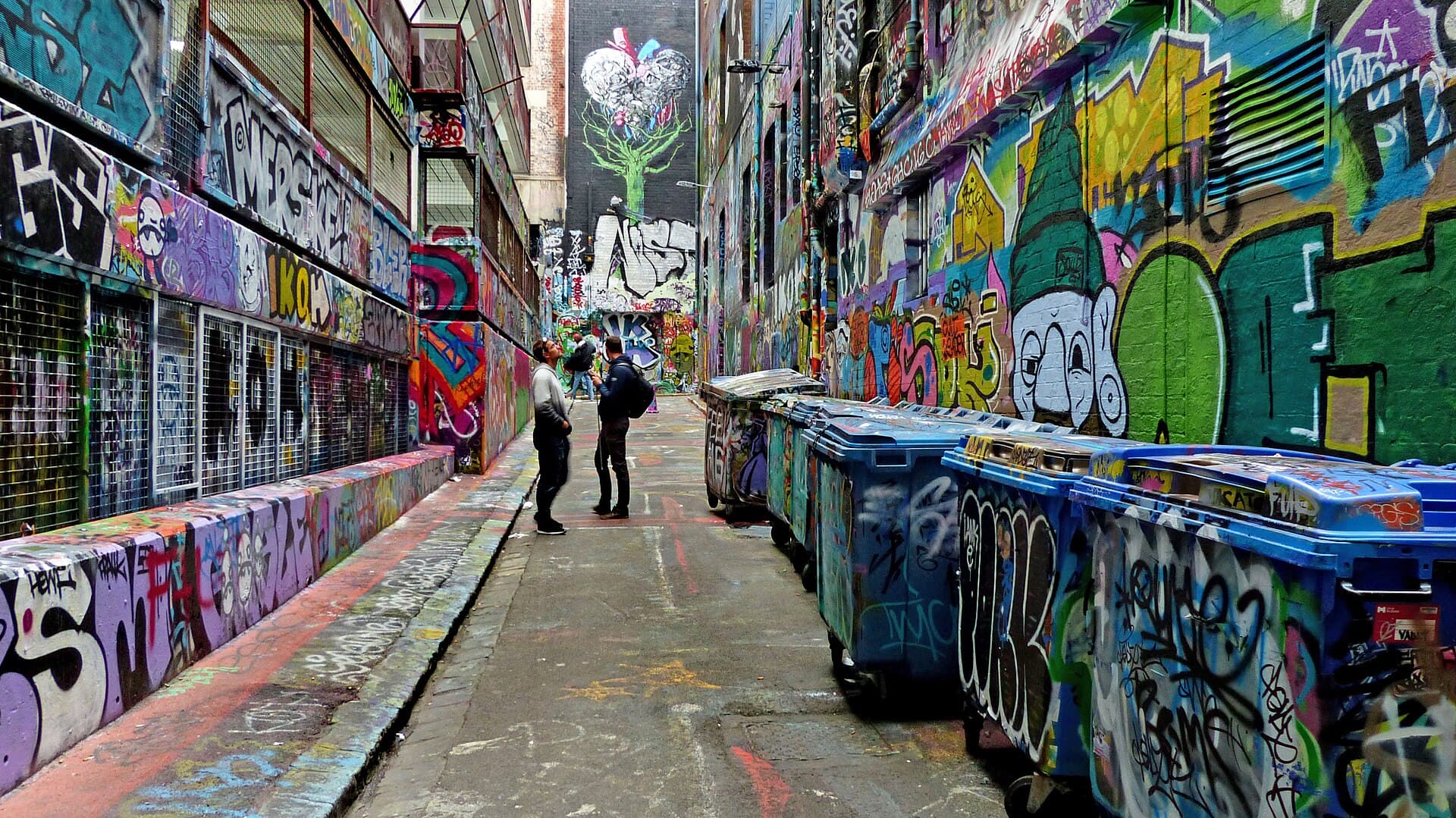
There is a version of Australia that exists mainly in a laneway. The bricks are tagged. The coffee is serious. The light is always four in the afternoon. A national brand hires the laneway to prove it is culturally awake, then runs the advertisement in a city whose daily life is a car park, a school gate and a shopping centre that still has a clock. The laneway is not a lie, exactly. It is a synecdoche that has been asked to do too much. It has become the country’s official texture.
Most Australians live in suburbs. Not “the regions” — that is another essay — and not the postcodes that produce the industry’s reference images. Suburbs with a Bunnings, a club, a council pool, a stretch of highway, a primary school named for a tree. If your brand cannot tell the truth there, it does not have an Australian territory. It has a location file.
Territory is operational
A suburb becomes brand territory when the offer is true on its streets. Distribution. A service bay. A roster that includes Thursday night. A club sponsorship that is a barbecue, not a naming-rights announcement written in another city. A store that looks like it expected the weather.
Retailers who understand this do not need to romanticise the suburb. They need to stock it. The hardware warehouse, the supermarket, the chemist, the bank that still has a face: their brand is the fact of being there when the school holidays start. Creative that photographs a suburb they do not serve is a postcard from a tourist.
Digital brands have a suburb problem they pretend not to have. Delivery maps, service availability, the price of freight, the assumption of dense public transport: these are territorial decisions. If the app is delightful in Collingwood and a shrug in Campbelltown, the brand is a postcode. Say so, or fix the map.
The inner city is not a moral high ground
Using a laneway as proof of values — creativity, diversity, rebellion — is a tired move. Those laneways are also rent, tourism and a fight about who gets to stay. A brand that extracts the look without paying the people who live the look is doing what brands always do to picturesque disadvantage. Australians have learned to see it.
If you want the inner city, be specific and small. Name the street only if you have a right to. Hire the artists. Do not paint a mural as a weekend of meaning. Murals are a long maintenance obligation. Most “community walls” are unpaid outdoor media.
If you want the suburbs, do not send a crew to find the one fibro house that photographs like a thesis. Photograph the ordinary plenty: the oval, the plaza, the newish brick, the immigrant grocer that has been there longer than your brand. Ordinary plenty is the country’s actual texture. It is harder to style. That is why it is unused.
Clubs, schools and the unglamorous civic
The suburb’s institutions are still the ones that teach loyalty. Sporting clubs, RSLs, temples, churches, language schools, the public school fete. Brands that treat these as activation channels will be tolerated for a season. Brands that become useful — a freezer, a bus, a scholarship that is not a film — get remembered in the minutes.
Do not dress this up as purpose unless the board would keep paying when the cameras leave. A sausage sizzle is not a strategy. It is a good way to stand next to a club that already has one. The strategy is the standing, year after year, when it is raining and no one from head office is there.
Local media still exists. It is thinner, and it is read. A notice in a local paper or a Facebook group that is actually useful — a recall, a job, a changed hour — will do more for suburban reputation than a national fifteen-second ad that used a suburban extra.
New suburbs, old suburbs, and the ones that are still being named
Australian cities keep growing at the edges. Estates with display homes, a single supermarket and a bus that will come later are already markets. They are also easy to caricature. A brand that only arrives as a billboard on a highway into an unfinished suburb is extractive. Open a service, hire locally, or stay on the highway and do not use the word community.
Older suburbs carry a different literacy. They have seen brands come and go. They remember the bank that left, the pub that became apartments, the factory that became a precinct with a distinctive typeface. If you arrive as the precinct, you inherit that memory. Acknowledge it or you will be filed with the other visitors.
Restored place names and dual names are not a campaign opportunity. They are a fact of the map. Use them correctly, including on wayfinding and in the IVR, and do not turn a renaming into a purpose film. The suburb did not ask to be your values.
Language of place
Do not flatten every suburb into “community”. Community is a word head office uses when it does not know the club’s name. Use the place names. Use the correct ones, including the ones that have been restored. Use “the shops” if that is what people say. Do not use “the village” unless it is one.
Avoid the national voice that treats the suburb as a joke — the cul-de-sac punchline, the bogan extra. That voice is a class position. It reads, correctly, as a brand that does not think it lives here.
The test
Spend a Saturday where the media plan says you have customers, without a shot list. Buy something. Try to park. Ask a teenager for directions using your brand’s name. If they know the shop and not the campaign, you have territory. If they know the campaign and not the shop, you have a laneway in the file and a gap on the map. Fill the gap. The laneway will still be there when you have earned a photograph.
Questions readers ask
- Why do so many Australian campaigns look like the same three inner suburbs?
- Because crews, agencies and a certain kind of client already live there, and the pictures are easy to sell as “urban energy”. The customer who lives five stations out can tell. They have been used as a colour grade before.
- How do you use a suburb in a brand without exploiting it?
- Spend time, money and naming rights in a way the suburb can refuse. Hire locally, keep a shop open when the shoot leaves, and do not turn a disadvantage into a texture. If you cannot be a neighbour, do not pretend to be a local.